
Turtle Season in Montezuma: When New LifeReaches the Pacific Ocean
There are certain times of year when Montezuma’s coastline feels especially alive. During turtle season, that feeling takes on a whole new meaning.
Along the beaches of the southern Nicoya Peninsula, sea turtles return to the sand to nest. Weeks later, tiny hatchlings begin their first journey toward the Pacific Ocean. It is one of Costa Rica’s most remarkable natural cycles, but what makes experiencing it in Montezuma particularly special is how closely conservation is connected to everyday life here.
On Playa Montezuma, ASVO Montezuma works to protect sea turtles and their nesting habitat, with releases sometimes taking place right along the coastline. Farther beyond the village, the Refugio Nacional de Vida Silvestre Romelia protects important nesting beaches and coastal ecosystems—and Hotel nYa supports its conservation work.
For visitors, turtle season is therefore about much more than the possibility of seeing a hatchling reach the ocean. It is an opportunity to understand the work happening throughout Montezuma to protect the wildlife that makes this coastline so extraordinary.
Turtle season is a cycle, not a single date
The first thing to understand about turtle season is that nature doesn’t follow a tourism calendar.
Nesting, incubation, and hatching take place over several months, with timing influenced by species, weather, ocean conditions, and individual nests. Around Montezuma, July through December is an important period for local nesting activity, including olive ridley and leatherback turtles.
That means two travelers visiting only a few weeks apart may have completely different experiences. One may learn that turtles have recently come ashore to nest, while another might be fortunate enough to be present when hatchlings are ready to make their way toward the ocean.
There is no guaranteed release date or scheduled wildlife encounter—and that’s exactly how it should be. Turtle conservation follows the animals, not the visitor itinerary.

ASVO Montezuma: conservation right on Playa Montezuma
One of the most special things about turtle season here is that conservation isn’t happening somewhere far from town. It is taking place along the same coastline visitors walk, swim, and explore during their stay.
ASVO Montezuma, part of the Asociación de Voluntarios para el Servicio en las Áreas Protegidas, operates a sea turtle conservation project on Playa Montezuma. Its work includes monitoring nesting activity and helping protect nests and hatchlings as part of a broader commitment to conserving the area’s coastal ecosystems.
For guests at Hotel nYa, this work is particularly close. The project operates along the same stretch of coastline experienced during a stay, and when hatchlings are ready, releases may take place on Playa Montezuma.
If a release happens to coincide with your visit, it can be an unforgettable experience. But the important word is may.
Hatchlings emerge according to their natural cycle, and releases aren’t scheduled around visitors. Any opportunity to witness one depends entirely on what is happening at the conservation project at that particular moment.
Ask our team during your stay and we’ll be happy to share any current information available from the local project

Romelia: protecting the coastline beyond the villae
ASVO isn’t the only turtle conservation story connected to Montezuma.
The Refugio Nacional de Vida Silvestre Romelia protects beaches, coastal forest, and important wildlife habitat around Montezuma. Its protected coastline includes nesting habitat for sea turtles, while the surrounding forests provide refuge for monkeys, tropical birds, and many other species.
This wider perspective is important because protecting sea turtles isn’t only about protecting eggs in the sand. Healthy turtle populations depend on healthy beaches, marine ecosystems, surrounding forests, and communities committed to conserving them.
Hotel nYa has a direct connection to this work through its support of Romelia. It is part of a broader conservation philosophy that recognizes something fundamental about tourism in Montezuma: the nature visitors come here to experience also needs people willing to protect it.
Together, ASVO and Romelia tell two complementary conservation stories—one unfolding directly on Playa Montezuma and another protecting a wider stretch of the landscape surrounding the community
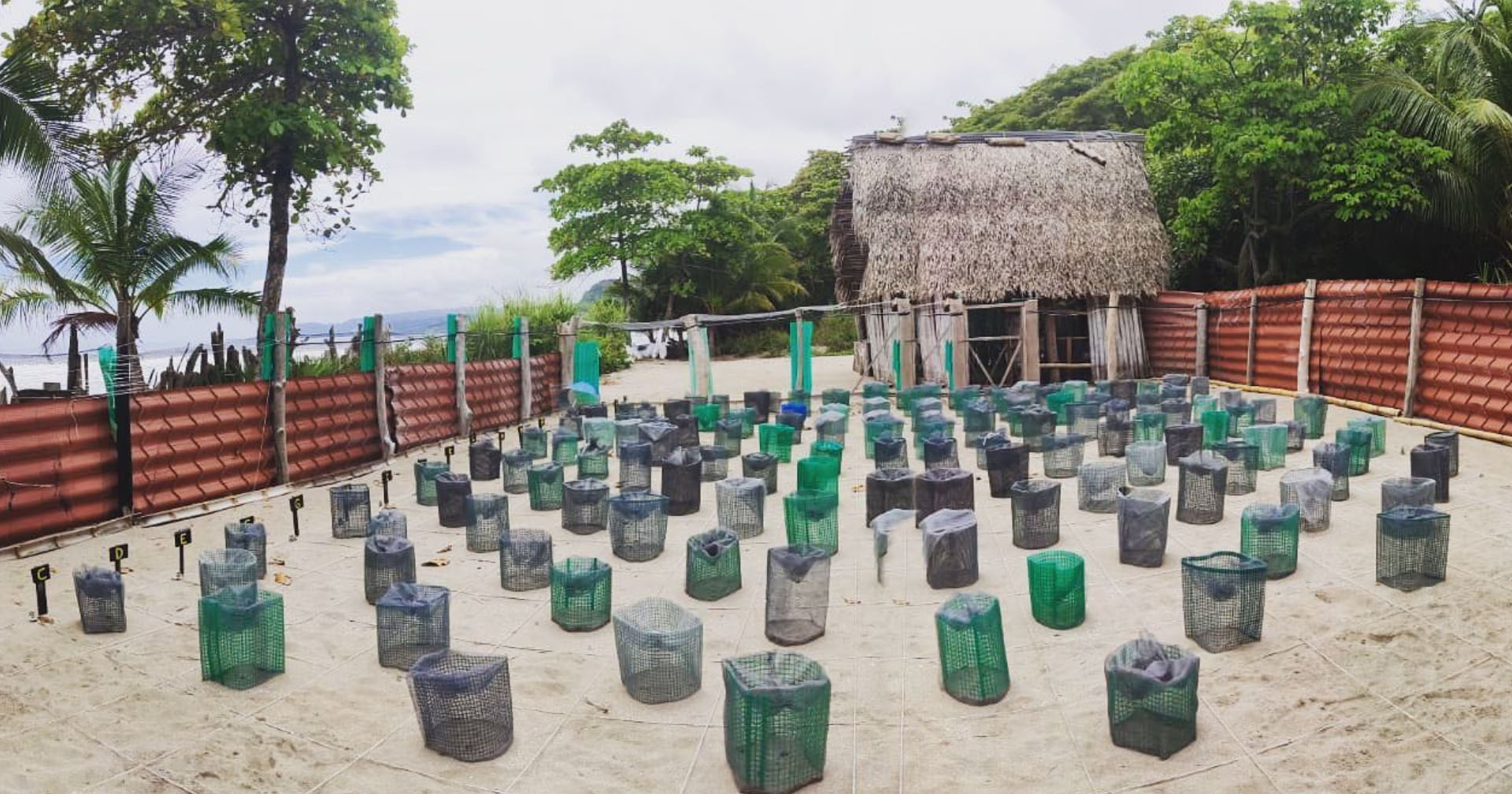
From nesting to the Pacific Ocean
A hatchling’s journey toward the ocean is only the final stage of a process that began weeks earlier.
Adult females come ashore to lay their eggs, often under the cover of darkness. Conservation teams monitor nesting areas, identify activity, and work to reduce threats to vulnerable nests.
Depending on the project and circumstances, nests may receive additional protection while incubation takes place.
Eventually, the hatchlings emerge.
For visitors, those few minutes of tiny turtles moving across the sand can be the most visible part of the story. For conservation teams, they represent weeks of monitoring, protection, and work behind the scenes.
Understanding that changes the experience. A release isn’t simply another attraction to photograph. It is one small moment within a much larger conservation effort.

Why every hatchling matters
Sea turtles face challenges from the moment they emerge.
Some are completely natural. Predators and difficult ocean conditions have always been part of the species’ life cycle. Others are linked to human activity: artificial lighting, disturbed nesting beaches, marine debris, development, fishing interactions, and people approaching turtles too closely.
Protecting nesting areas and reducing unnecessary disturbance therefore matters.
Visitors don’t need to become conservation experts to contribute. Often, responsible behavior is remarkably simple:
- Keep a respectful distance from turtles and hatchlings.
- Never touch turtles, nests, eggs, or hatchlings unless authorized conservation staff specifically instruct you.
- Avoid flash photography and bright lights around nesting areas.
- Don’t stand between hatchlings and the ocean.
- Keep beaches clean and take everything you bring with you.
- Avoid leaving deep holes or structures in the sand that could become obstacles.
- Keep pets away from active nesting and release areas.
- Always follow the instructions of the conservation team.
Costa Rica’s Sistema Nacional de Áreas de Conservación — SINAC is also a useful resource for learning more about the country’s protected areas and wildlife conservation.
If you’re lucky enough to witness a release
For many visitors, watching tiny turtles move toward the Pacific Ocean becomes one of the moments they remember most from Costa Rica. The best way to experience it is quietly.
Follow instructions, remain behind any designated areas, and give the hatchlings space to make the journey themselves. If you’re traveling with children, it can also become a meaningful opportunity to explain why wildlife conservation sometimes means simply watching without interfering.
There is no need to get as close as possible or position yourself for the perfect photograph.
The turtles are the priority.
And perhaps that’s what makes the experience so powerful: for a few minutes, everyone on the beach is there for exactly the same reason—to watch these tiny animals begin a journey entirely on their own.

Your Green Fee helps protect the place you’re experiencing
At Hotel nYa, sustainability isn’t meant to exist separately from the guest experience.
The hotel’s connection to conservation has deep roots in Montezuma, and today that commitment continues through support for local environmental and community initiatives, including the work of Romelia.
The Green Fee gives guests an opportunity to become part of that broader effort.
It creates a direct connection between staying in a destination surrounded by extraordinary biodiversity and contributing toward protecting it. The beaches you walk in the morning are wildlife habitat. The forests surrounding the hotel support countless species. The coastline that makes Montezuma such a remarkable place to visit is also an ecosystem requiring continued protection.
Through the Green Fee and Hotel nYa’s support of local conservation initiatives, a stay can contribute in a small but meaningful way to the destination itself.
The idea is simple: travel should leave something positive behind, too.
Turtle season is part of a much bigger wildlife story
Sea turtles aren’t the only reason the greener months are such an interesting time to experience Montezuma.
As rainfall transforms the landscape, forests become denser, rivers carry more water, and waterfalls gain strength. Monkeys can be seen moving through the canopy with their young, tropical birds fill the mornings with sound, and humpback whales arrive along Costa Rica’s Pacific coast.
Our When Nature Gets Louder: Wildlife Season in Montezuma guide explores this broader seasonal transformation and why Green Season can be one of the most rewarding periods for travelers interested in nature.
And wildlife doesn’t need to define every day of your stay. Montezuma moves easily between waterfalls, beaches, surfing, wellness, local culture, and simply having nowhere you need to be. Our Activities & Adventures in Montezuma guide offers more inspiration for experiencing
the destination beyond turtle season.
Frequently Asked Questions About Turtle Season in Montezuma
When is turtle season in Montezuma?
Turtle activity varies according to species, weather, and individual nesting cycles, but July through December is an important period for nesting activity around Montezuma and Romelia.
Where can I learn about turtle conservation in Montezuma?
ASVO operates a sea turtle conservation project directly on Playa Montezuma, while nearby Romelia protects important nesting beaches and surrounding coastal ecosystems. Hotel nYa supports conservation work connected to Romelia and can also help guests find current
information about local turtle activity.
Can I see baby turtles being released?
Possibly, but releases cannot be guaranteed. Hatchlings emerge according to natural incubation cycles, and conservation teams determine when and how observation is appropriate.
Which sea turtles nest around Montezuma?
Olive ridley turtles are particularly important locally, while leatherback turtles have also been documented in nesting habitat around Romelia.
Can children watch a turtle release?
When public observation is permitted, it can be a wonderful educational experience for families. Children should remain supervised and follow all instructions from conservation staff.
Can I take photographs?
Photography should always follow the instructions of the conservation team. Flash photography and bright lights should not be used around nesting turtles or hatchlings.
How does staying at Hotel nYa support conservation?
Hotel nYa supports local environmental and community initiatives, including its relationship with Romelia. The hotel’s Green Fee helps connect the guest experience with the broader commitment to protecting the ecosystems surrounding Montezuma.
A small journey with a much bigger meaning
Watching a tiny turtle make its way toward the Pacific may last only a few minutes. Understanding everything required to give it that opportunity changes the experience completely.
In Montezuma, conservation isn’t happening somewhere far removed from where travelers stay. ASVO is working directly on Playa Montezuma. Romelia is protecting beaches and forest farther along the coastline. Local people, volunteers, organizations, and businesses are all contributing to protecting the ecosystems that define this community.
And through Hotel nYa’s Green Fee and continued support of local conservation, guests can become a small part of that story too.
If turtle season happens to coincide with your visit, ask our team about current activity and responsible opportunities to experience it.
Nature determines the timing. We simply have the privilege of being here when it happens.
nYa Hotel — Montezuma, Costa Rica
reservations@nyahotel.cr | +506 8609 3999 | www.nyahotel.cr
More Posts
Why Hotel Nya – Montezuma Is One of Costa Rica’s Best Destinations for Nature Lovers
Montezuma, on Costa Rica's Nicoya Peninsula, brings together tropical forests, Pacific beaches, waterfalls, tide pools, and abundant wildlife in a...

Wellness, Simplified: Finding Your Way Back toYourself in Montezuma
Wellness has become a big word. Morning routines, supplements, sleep scores, cold plunges, retreats, treatments, and practices designed to help us...
How Professional Massage Therapy Helps You Relax During Your Vacation
A vacation is often a chance to step away from everyday responsibilities, explore new surroundings, and spend more time doing things you enjoy....
