
Montezuma, on Costa Rica’s Nicoya Peninsula, brings together tropical forests, Pacific beaches, waterfalls, tide pools, and abundant wildlife in a compact coastal setting. For travelers who want to spend more time outdoors, choosing accommodation close to these natural features can make each day easier to plan. A central base allows visitors to move between beach walks, forest trails, wildlife encounters, and quiet periods of rest.
A Natural Setting in the Heart of Montezuma
One practical benefit of staying in central Montezuma is access. The town sits between jungle-covered hills and the Pacific Ocean, with beaches, trails, and waterfalls nearby. A hotel in Montezuma can therefore be more than a place to sleep. Its location can shape how easily you experience the surrounding landscape.
The property is located in downtown Montezuma, within walking distance of beaches and local attractions. This makes it possible to begin the morning with a walk toward the coast, explore the town during the day, and return to a quieter garden environment afterward. For nature lovers, that balance between access and downtime can be useful when planning outdoor activities.
Wildlife Watching Without Going Far
Nature observation does not always require a full-day excursion. The tropical gardens around the property provide habitat for a variety of animals and birds, creating opportunities to notice wildlife during slower parts of the day. Visitors may see iguanas, squirrels, monkeys, agoutis, raccoons, coatis, and other species depending on conditions and timing.
Birdwatchers can also look for colorful tropical species, including toucans, hummingbirds, trogons, parakeets, and scarlet macaws.
This makes Montezuma nature watching accessible for travelers who prefer a flexible pace. Sitting quietly in a garden, listening to birds, or watching the trees can become part of the experience without requiring specialized equipment.
Beaches, Tide Pools, and Waterfalls Nearby
Montezuma’s coastline offers several ways to experience the Pacific environment. The main beach is close to town and provides space for swimming, relaxing, and watching sunsets. At low tide, natural pools can reveal small areas of marine life and changing coastal textures.
The Montezuma waterfalls add another dimension to the landscape. Trails lead through vegetation and rocky areas toward pools and cascading water, offering a setting for walking, photography, and time beside freshwater. Because conditions around waterfalls can change, visitors should check local guidance and water conditions before entering.
For travelers interested in marine life, snorkeling and island excursions provide opportunities to observe underwater environments. Trips to Isla Tortuga, for example, can include snorkeling around volcanic rock reefs where different forms of marine life can be observed.
A Useful Base for Wildlife and Nature Excursions
A nature-focused trip often includes more than one ecosystem. Montezuma provides access to tropical forest, coastal habitats, protected areas, and nearby marine environments. Guided wildlife tours can help visitors learn more about local species while exploring forests and coastal areas.
Nearby conservation areas also offer opportunities for hiking and wildlife observation. Cabo Blanco Absolute Natural Reserve has forest trails and coastal scenery, while the Romelia Wildlife Refuge protects important coastal habitat. Visitors interested in conservation can learn about local ecosystems and the importance of protecting nesting beaches and native wildlife.
When you book wildlife hotel Montezuma accommodation, location is one factor worth considering alongside room type, access, and the activities you want to experience. Staying near the center can reduce unnecessary travel between accommodation and local walks or excursions.
Gardens That Extend the Nature Experience
The hotel’s gardens are designed as living outdoor spaces rather than simply decorative areas. Tropical vegetation creates a setting where visitors can pause between activities and observe the changing sounds and movement of the surrounding environment.
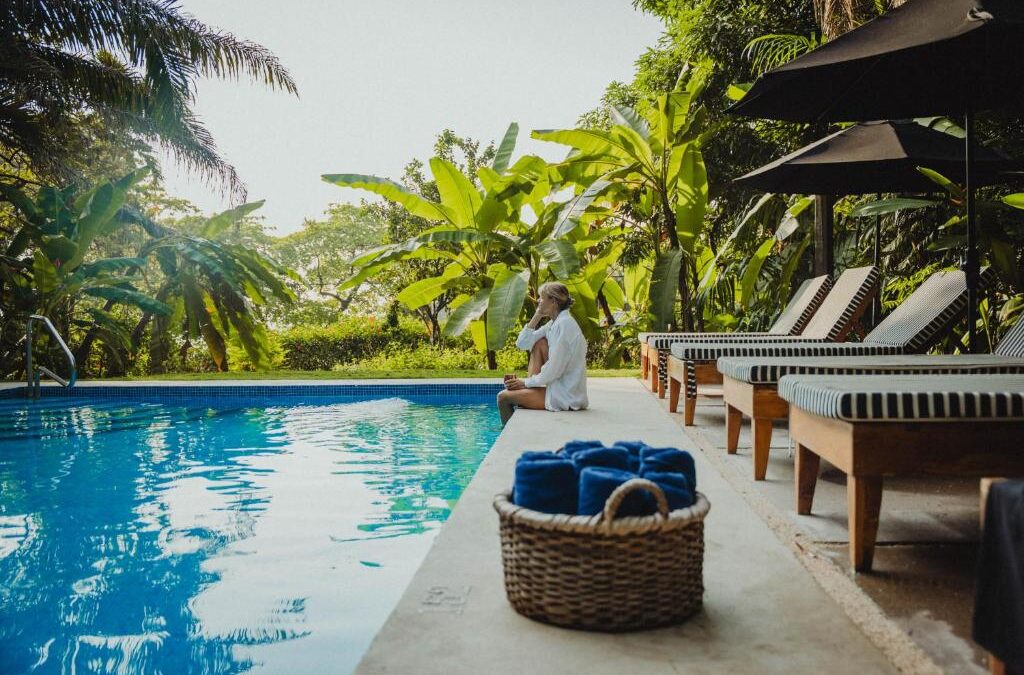
Outdoor hammocks provide places to read or rest beneath the trees, while the pool area offers another way to spend time outdoors. The lap pool is surrounded by mature trees and provides ocean views. These spaces can be useful for travelers who want a nature-centered itinerary without filling every hour with scheduled activities.
The experience also changes throughout the day. Morning bird activity, daytime movement through the gardens, and evening sounds can make the same outdoor space feel different from one visit to the next.
Sustainability and Connection to the Community
Nature travel is closely connected to responsible tourism. Protecting beaches, forests, wildlife habitats, and local ecosystems helps preserve the qualities that attract visitors to Montezuma.
The property supports conservation through a partnership with the Romelia Wildlife Refuge and incorporates sustainability into its approach to hospitality. Its connection to the local community also reflects Montezuma’s relationship between tourism, conservation, and culture.
Travelers can support this balance through simple choices. Staying on established trails, avoiding disturbance to animals, reducing waste, respecting protected areas, and following local guidance can help limit the impact of outdoor exploration.
Planning a Nature-Focused Stay in Montezuma
A useful itinerary does not need to be packed. Start with nearby beaches or a garden walk, then reserve time for a waterfall hike, wildlife tour, snorkeling trip, or protected-area visit. Allowing space between activities makes it easier to respond to weather, tides, trail conditions, and wildlife activity.
Pack practical essentials such as comfortable walking shoes, sun protection, reusable water, insect protection, and a light rain layer. Binoculars and a camera can also be useful for wildlife observation, although patience is often more valuable than equipment.
Frequently Asked Questions
1. Why is Montezuma suitable for nature lovers?
Montezuma combines beaches, tropical forests, waterfalls, tide pools, wildlife habitats, and nearby protected areas, giving visitors several ways to experience nature within one region.
2. What wildlife can visitors see around the hotel?
Depending on season and conditions, visitors may encounter monkeys, iguanas, squirrels, coatis, agoutis, raccoons, and many tropical bird species in and around the gardens.
3. Can visitors explore nature without booking a guided tour?
Yes. Beaches, town trails, gardens, and some nearby natural attractions can be explored independently. Guided tours can be useful when visitors want additional information about wildlife or conservation.
4. What should travelers consider when choosing a hotel in Montezuma?
Consider location, walking access to beaches and activities, room configuration, outdoor spaces, accessibility, and how well the accommodation fits your planned itinerary.
5. When is the best time for nature watching in Montezuma?
Wildlife can be observed throughout the year, but sightings vary with weather, season, time of day, and animal behavior. Early mornings are often useful for observing active birds and wildlife.
For travelers planning a nature-centered visit, Hotel Nya – Montezuma offers a convenient base for exploring beaches, wildlife, waterfalls, gardens, and the wider Nicoya Peninsula at your own pace.